




Intent
Psychology learners are often curious about how theories of cognition and aggression translate into real-world contexts. Partnering with a Google Machine Learning Engineer allowed learners to apply their studies to meaningful, open-ended challenges that linked directly to mental health, online safety, and user experience design.
Implementation
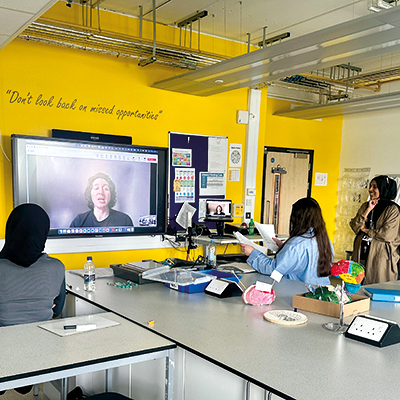
Year 12 focused on abnormalities, tackling the question: “How might we enable adolescents to have positive mental health and well-being?” They explored topics such as anxiety, depression, neurodiversity, and the stigmatisation of mental health, generating innovative ideas to support adolescent well-being through the design and creation of user interfaces for apps they hope to develop further. Year 13 applied their knowledge of aggression to the challenge: “How might we enable teenagers to stay safe online with aggressive social media?” Learners used design thinking processes to explore local and online aggression, always considering the impact on cognition. Working closely with Google, they developed practical solutions, including Translatism, a prototype social media interpreter to help neurodivergent and neurotypical young people communicate safely online as there is a gap for this important and unmet need. Throughout the projects, learners were introduced to professional UX design tools and processes, deepening their understanding of how psychology informs digital innovation.
Impact
Learners gained a richer understanding of psychology through practical application, linking theory to pressing real-world issues. They developed confidence in presenting to a global employer, applied creative problem-solving skills, and produced solutions that impressed both their teacher and industry mentor.